Introduction: Production LLM applications need structured prompt management—not ad-hoc string concatenation scattered across code. Prompt templates provide reusable, parameterized prompts with consistent formatting. Versioning enables A/B testing, rollbacks, and tracking which prompts produced which results. This guide covers practical prompt template patterns: template engines and variable substitution, prompt registries, version control strategies, A/B testing frameworks, […]
Read more →Category: Technology Engineering
Technology Engineering
Prompt Optimization Strategies: From Structure to Automatic Refinement
Introduction: Prompt optimization is the systematic process of improving prompts to achieve better LLM outputs—higher accuracy, more consistent formatting, reduced latency, and lower costs. Unlike ad-hoc prompt engineering, optimization treats prompts as artifacts that can be measured, tested, and iteratively improved. This guide covers the techniques that make prompts more effective: structural patterns that improve […]
Read more →Building Production RAG Applications with LangChain: From Document Ingestion to Conversational AI
Introduction: LangChain has emerged as the dominant framework for building production Retrieval-Augmented Generation (RAG) applications, providing abstractions for document loading, text splitting, embedding, vector storage, and retrieval chains. By late 2023, LangChain reached production maturity with improved stability, better documentation, and enterprise-ready features. After deploying LangChain-based RAG systems across multiple organizations, I’ve found that its […]
Read more →Prompt Chaining Patterns: Breaking Complex Tasks into Manageable Steps
Introduction: Complex tasks often exceed what a single LLM call can handle well. Breaking problems into smaller steps—where each step’s output feeds into the next—produces better results than trying to do everything at once. Prompt chaining decomposes complex workflows into sequential LLM calls, each focused on a specific subtask. This guide covers practical chaining patterns: […]
Read more →OpenAI Assistants API: Building Stateful AI Agents with Code Interpreter and File Search
Introduction: OpenAI’s Assistants API, launched at DevDay 2023, represents a significant evolution in how developers build AI-powered applications. Unlike the stateless Chat Completions API, Assistants provides a managed, stateful runtime for building sophisticated AI agents with built-in tools like Code Interpreter and File Search. The API handles conversation threading, file management, and tool execution, allowing […]
Read more →Understanding Modern IT Methodologies: A Comprehensive Comparison
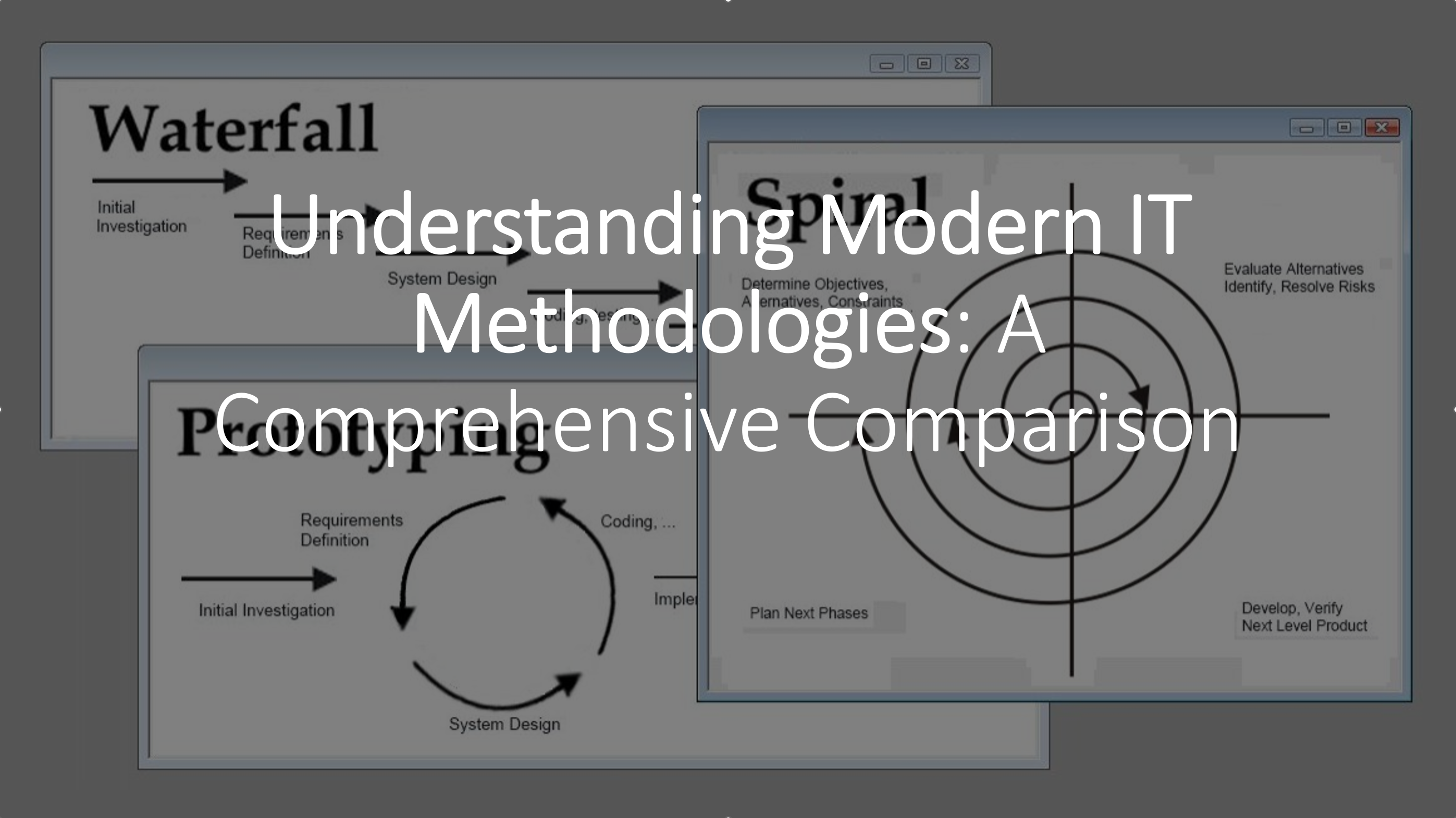
After two decades of building and operating enterprise systems, I’ve watched the IT operations landscape transform dramatically. What started as siloed development and operations teams has evolved into a rich ecosystem of methodologies, each addressing specific organizational challenges. In this comprehensive guide, I’ll share my perspective on four dominant approaches: DevOps, DevSecOps, Site Reliability Engineering […]
Read more →